Home » The SEO Process Explained: How SEO Works, Step-by-Step
The SEO Process Explained: How SEO Works, Step-by-Step
If you’ve ever wondered how SEO actually works, you’re not alone. Most small business owners I talk to know they need to “do SEO” but aren’t sure what that really means.
At Rank Magic, we break down the SEO process into simple, understandable steps — no tech jargon, no confusing buzzwords. Let’s walk through the process step by step.
SEO is the process of modifying a website and the links that point to it from other websites so that it appears higher in the list of results of major search engines when users search for your products or services. This is sometimes called website optimization.
All the major search engines use proprietary systems of evaluating web sites against keyword phrases entered by people as they determine how to rank all the different web pages. Proper search engine optimization, such as that done by Rank Magic, ensures that a website appeals to all of the individual search engine ranking algorithms. And it uses “ethical” methods that are approved by the search engines, preventing your site from being penalizedfor sneaky or spammy techniques.
The Goal of Website Optimization
Our goal at Rank Magic is to strive for that #1 ranking. We all realize that’s an impossible goal to achieve for every keyword and in every search engine, but it nevertheless is the goal.
After #1 rankings, a top 10 ranking is better than a top 20 ranking, and a top 20 ranking is obviously better than a top 30 ranking.
But after the top 20, you might as well not even be on the list, because almost no one bothers to dig down deeply enough to find you. This is especially true for local searches:
76% of people who search for a nearby business visit that business within 24 hours, according to Google/Think with Google research. If you’re not near the top of the results, you’re missing out on customers who are ready to act right now.
There are two main things that govern where you rank: Relevance and Reputation.
Relevance has to do with the keywords people search for and your web site’s on-page optimization for those keywords.
Reputation has to do with off-page factors—mostly your link authority and the trust signals search engines pick up from around the web. At Rank Magic, we address both factors.
Relevance: On-Page Optimization
Keyword identification, prioritization and selection is the first, and arguably the most important, phase of search engine optimization. It does you no good to be optimized to show up for the wrong keywords or for keywords no one ever searches for.
Next, detailed optimization recommendations form the action plan.: I write those to position your keywords and related phrases on the right pages, in the right places, and with the right frequencies to gain high rankings.
Those recommendations are implementednext, Text is rewritten and web pages are re-coded. Rewriting text is your responsibility, as the one with the best knowledge of your business, perhaps with a copywriter’s help. Re-coding is your web designer’s job. We offer unlimited support to both of you until your site is properly optimized.
While that’s in progress, we create a baseline Keyword Status Report showing exactly how your website ranks for your chosen keywords before optimization. We also conduct a technical site crawl to reveal any warnings or errors that could hurt your rankings or conversions.
Finally, we link to your optimized website from our own high-authority website so search engines re-crawl your site and note the new or updated pages. From there, we provide a monthly Keyword Status Report tracking your results.
We report to you monthly about A) your keyword rankings versus top competitors, traffic and other trends, and B) how your authority compares to your top competitors. We also monitor your site for any technical errors on a weekly basis and alert you as needed..
Why Mobile Performance and User Experience Matter
On-page optimization today is about more than placing the right words in the right spots. Google also pays close attention to user experience signals:
how fast your pages load
how easy your site is to use on a phone
and whether visitors stick around once they arrive.
Mobile phone speed matters because 57% of local search queries are now made from a mobile device, according to ReviewTrackers research. If your site is slow or hard to navigate on a phone, you’re losing customers before they even see what you offer. I track where your visitors come from; our current clients range from 15% phone users to 80%. The higher your mobile share, the more important your mobile performance matters.
This part of the SEO process for your site is a program to build genuine link authority and overall trust with the search engines.
Link authority refers to the number and authority of web pages that link to you. But authority isn’t just about how many links you have anymore—search engines now weigh a broader mix of authority signals:
the relevance of sites linking to you
how well your content demonstrates real expertise in your field
and how consistently your business is represented across the web.
Off-page optimization is still essential, If no other reputable pages point to your site, search engines will struggle to find and amd may not trust it at all.
One of the most overlooked pieces of off-page SEO for small businesses is citation management.
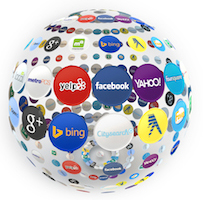
A “citation” is any place online that lists your business’s name, address, and phone number (often shortened to “NAP”) — directories, industry associations, chambers of commerce, review sites, and mapping apps. Each listing acts like a small vote of confidence telling search engines your business is real, active, and located where you say it is.
Citations matter enormously for local search visibility. Search engines cross-check your citations against each other and against your own website to decide how much to trust your listing in local results like the Google Local 3-Pack. When that information matches everywhere, it strengthens your standing. When it doesn’t, search engines get confused about which version is correct, and customers get frustrated too.
One 2024 industry studyfound that businesses with consistent NAP information across at least 15 directories are 23% more likely to appear in the Google Local 3-Pack than businesses with mismatched listings. And BrightLocal’s Local Citations Trust Report found that 68% of consumers would stop using a local business if they found incorrect contact information about it online.
Citations also feed voice search: research from SCORE found 58% of consumers have used voice search to find local business information, and voice assistants lean heavily on consistent, verified data to decide which business to recommend.
A few best practices keep citation management manageable for a small business:
Pick one “master” NAP format — decide exactly how your name, address, and phone should be written, and use it everywhere.
Audit existing listings on major directories and your Google Business Profile, and fix mismatches.
Update citations immediately after any move, number change, or rebrand.
Prioritize the directories that matter most for your industry and location first.
As part of our local search optimization services, Rank Magic helps small businesses build and clean up their citation profiles so search engines and customers always find accurate information about your business.
The Same Signals Also Help You Show Up in AI Search
These days, customers aren’t only finding businesses through a traditional Google results page. Many are asking ChatGPT, Google’s AI Overviews, or a voice assistant a question like “who’s a good plumber near me” and getting a short, direct answer instead of a list of links.
The encouraging news for small business owners is that you don’t need a separate strategy for this—the same groundwork that helps you rank well in classic search also helps AI platforms find, trust, and recommend your business.
Accurate, consistent citations are a good example. Industry ranking-factor research shows that citation consistency carries real weight for both systems. It contributes to traditional local pack rankings and to AI search visibility, since AI tools also lean on directory and profile data to confirm that a business is real and current.
The same goes for the other fundamentals covered on this page. Clear, well-organized page content, genuine authority signals, and a fast, mobile-friendly site all make it easier for an AI system to understand what your business does and to feel confident recommending you, just as they help a traditional search engine rank you higher. In short, good SEO and good AI visibility are largely the same work, done well.
AI does seem to weigh some things more heavily than search engines do. Citations and online reviews, for example, are a big factor in your AI visiblility
To the extent that you’ve selected effective keywords, these steps should bring substantially more visitors to your website. And to the extent that your website does an effective selling job, these steps should bring in more revenue to your business. And that’s what it’s all about!





 These days, customers aren’t only finding businesses through a traditional Google results page. Many are asking ChatGPT, Google’s AI Overviews, or a voice assistant a question like “who’s a good plumber near me” and getting a short, direct answer instead of a list of links.