

To Blog or Not To Blog?

Does your small business need a blog?
Would you love to have the perfect prospects find you without having to spend thousands in purchased advertisements?
Would you be happy to grow your business and build sustainable profitability with a steady stream of top clients without spending hours per week on marketing tasks?
For any business to grow, new prospects need to be able to find you easily where they search – Google. And while Google has millions of websites to review, one thing that helps yours climb to the forefront of Google’s attention is fresh, high value content.
The most effective way to accomplish this is with blogging. Blogging is just one form of content marketing, and we’ve all heard that content is king.
Bottom line, consumers are not randomly choosing a company to work with. They are researching, reviewing, and weighing in on whether you’re the company they want to choose. Notice I didn’t say “the best” company – I said the one they want to choose. Years ago, marketing and advertising messages were focused on the company proudly stating that they are the best in their industry.
Times have changed – we know that “best” is strictly subjective – and quite frankly, meaningless. Your company may be the best option for some prospects and be a bad fit for others. So focus your blog topics on your uniqueness, who you help and how you help them. The best-fit prospects will identify with your company as “the best” – for their situation and needs.
A blog makes your small business more competitive

But do I really need a blog?
Yes. High value blogs give your audience new, meaningful content to consume on a consistent basis. They are interesting, educational, thought provoking and memorable. Blog content is not only what Google is seeking, it’s what your next top client is searching for, reading and evaluating. Now if your perfect prospect has a choice of 2 companies – who do you think will get the sale: the company that posts valuable content 2 to 4 times per month, or the company that randomly posts blogs 2 or 3 times per quarter? And if you’re not blogging at all, you’ve automatically lost that sale.
Yes, you can do this yourself. Simply write clean and informative articles, without spelling or grammar mistakes, with a friendly and professional tone of voice, accompanied by high quality images, at least twice a month, every month. Post that article on your blog page and on your LinkedIn profile. For good measure you’ll want to include that article in a branded and formatted email campaign for those prospects who have found you and have signed up for your emails but are still considering working with you.
Check out my 3 blogging secrets.

This is totally do-able. However, it takes time. Time away from servicing your clients, time away from leading your team, time away from building your projects and running your operations.
It also takes skill. You may have gotten away with acceptable writing for college term papers, but marketing-ready copy is a different skill set. Tone of voice as well as grammar and punctuation are all essential.
Even for the most devoted Do It Yourselfer, please know that creating high quality content consistently is not a Saturday Home Depot project. It’s a “must get done every month” ongoing business process. It must be planned ahead of time and executed according to a pre-determined launch schedule.
You can do this. In fact, you can jump in right now. Get out a paper and pen….
- List the top 3 questions you get asked about most often in your industry.
- List the top 3 frustrations and problems your clients have that your company solves.
- List the top 3 goals your prospects have that your company can help attain.
- List the top 3 ways your company does things differently.
If you can do this (of course you can!) you’ve got your topics for weekly blog posts for the next 3 months! You’re welcome 😊
Now …
Now that you’ve had the experience of beginning your plan – decide if you’re willing to commit the time to carry this out yourself, or if you’ll outsource it. Is this going to be in your Zone of Genius or will it be an unwelcome burden? Either way – blogging is a must, and it’s here to stay.
About our guest blogger

 “Alexa, tell me about voice search”
 When you add structured data to your pages, you’ll need to use what’s known as ‘schema markup’. This is a specific type of HTML code that lets Google recognize the format of the data you’ve added, and – crucially – pull this data through for search result snippets. Think of it like speaking to the Google bots in a language they can understand. And the better they understand you, the better chance your site will have of ranking.
 The way we type a search query is different from the way we search by speaking aloud.
 Mobile responsiveness is no longer the secret of clued-up web designers; all the
  About the Author
 A CTA is a direction that asks or tells your reader to do something. It’s an image or line of text that prompts your reader to take an action, like download, buy, learn, request, sign up, subscribe, join, phone, ask, get help …

 Make them brief. Occasionally for SEO purposes, a call to action may be longer for the sake of including keywords, but in general they tend to work better if they’re brief.
 SEO Mistakes Are Easy
 It’s very common for small business owners to recognize very early on that a website is indispensable to their business. They will often spend a great deal of time and effort in creating a website that is robust, full-featured, attractive, and even sexy. Often it will include a blog with months or years of laboriously crafted information.
 Your audience is people: current and future customers or clients. But out of zeal to achieve high visibility in Google, many small business owners focus on Google instead of on their customers.
 It’s natural to want to focus your SEO on search phrases that people search for a great deal. Optimizing for a phrase that people search for hundreds of thousands of times a month instead of phrases that people search for 20 or 30 times a month. The problem with that is that such keyword phrases are usually way too competitive for a small business to compete with.
 Too often small business owners want to keep their pages short and “punchy”. You may recognize that people don’t have the patience to read a great deal of content. The Internet expression TL:DR has become popular lately. It means “Too Long: Didn’t Read”.
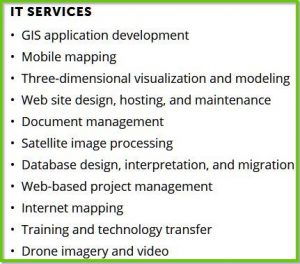 This is a critical error I see a lot. In order to present the website from growing too large, a business will include a page titled Services. On that page they may have a bulleted list of all the different things that they do, possibly with a sentence or two of description about each of them. This is an all-too-common small business SEO mistakes we see often.
 This is understandable. As a small business owner, you probably know little about
  Your search rankings are going to bounce around a bit, and that’s inevitable. But if you’re not paying attention to them, and your rankings begin to slide, you may not notice it in your revenue numbers until much later.




 Your customers want to be told about the benefits of your products, not the features. In this great example, the customer is told that The Fit Boxx will provide them with the key fitness products they need “and more.” Not only that, the brand will deliver to their door.
 There are a number of top tips to writing a CTA that will give you a great meta description: